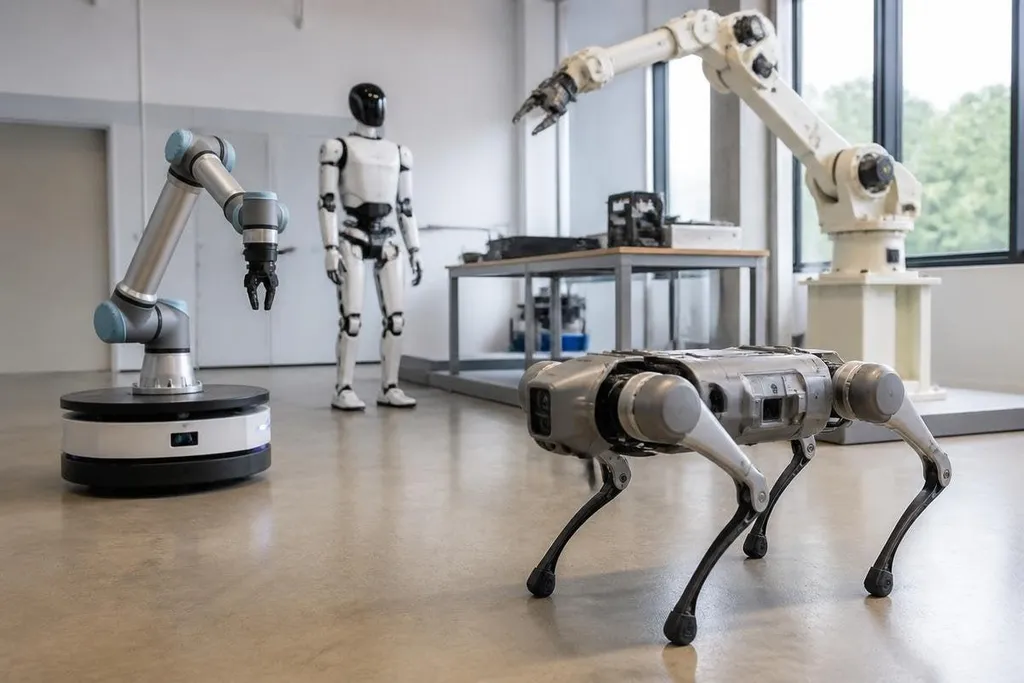
A country can lead in factory robots, walking machines, medical systems, or robot software. That makes a single ranking hard to defend, especially when the available material names no countries, machines, test results, or dates.
Quick read
- A serious ranking needs named robots, measured results, and recent deployment data.
- Robot hardware, software, research, and factory use should be scored separately.
- A country with strong laboratories may still have few robots working outside demonstrations.
What advanced means and how to compare countries
“Advanced” has no useful meaning on its own. A robot that moves boxes all day faces a different test from a surgical robot, a legged inspection machine, or a system that sorts waste.
The task sets the standard. A factory robot may need repeatable motion, a known payload, and safe operation near people. A field robot may need to handle rough ground, rain, changing light, and weak network links.
That difference changes the country list. One nation may build many industrial arms, while another produces strong vision software or research platforms. Counting both as the same kind of progress hides what each machine can do.
A useful comparison needs several types of proof. Company claims can show what a machine is meant to do, while a deployment record shows whether anyone uses it for paid work.
The strongest evidence usually includes:
- Named deployments: the company, site, number of robots, and task.
- Measured results: payload, speed, runtime, error rate, or task success.
- Independent tests: a paper, lab result, safety test, or public benchmark.
- Production detail: where the robot is made, how many units ship, and when sales began.
- Limits: tasks the robot cannot complete, conditions that stop it, and results still missing.
The score should keep these areas separate. Otherwise, a large number of research papers can outweigh a smaller group of robots that work every day in factories.
Research strength is not the same as deployment
Universities can produce useful methods without building a product. A robot may walk across a lab floor, pick up known objects, or complete a carefully prepared route. Those results matter, yet they do not prove that the same system can work through a full shift.
Deployment adds harder tests. Dust reaches sensors, objects arrive in the wrong place, batteries need charging, and safety stops reduce output. The public record should show how a robot handles those events before its home country gets a high rank.
A country’s rank needs named evidence: which company built the robot, where it ran, and what it did there. Reports at Robot24.com can tie those details to companies, machines, and field use before the comparison turns to hardware, software, and supply chains.
Hardware, software, and supply chains
A robot’s country of origin can be hard to define. The arm may be assembled in one country, use motors from another, run software written elsewhere, and depend on sensors made by several suppliers.
A country ranking should state what it is counting. Possible measures include companies headquartered there, robots assembled there, patents filed there, public research funding, or machines sold to customers. Each measure gives a different result.
The same rule applies to software. A robot may use an open-source operating system, a camera from one supplier, and a motion model trained by a separate research group. Giving one country full credit would overstate what any single team built.
A practical way to read the rankings
Use this checklist before accepting a claim about the leading robot-building countries:
- Check the date of every figure.
- Name the robot models behind the ranking.
- Separate lab demonstrations from paid deployments.
- Compare task results, not broad claims about intelligence.
- Look for production numbers and customer sites.
- Mark missing safety, runtime, and repair data.
I'd reject any country ranking that gives equal weight to a short demonstration and a robot that has worked for months at a named site. The gap between those records is where the useful judgment starts.
A defensible list can be written once the evidence names the countries, companies, machines, tests, and dates. Until then, the honest answer is a scorecard rather than a winner.